

Gujarat Selects Neuralix to Build its Environmental Intelligence System
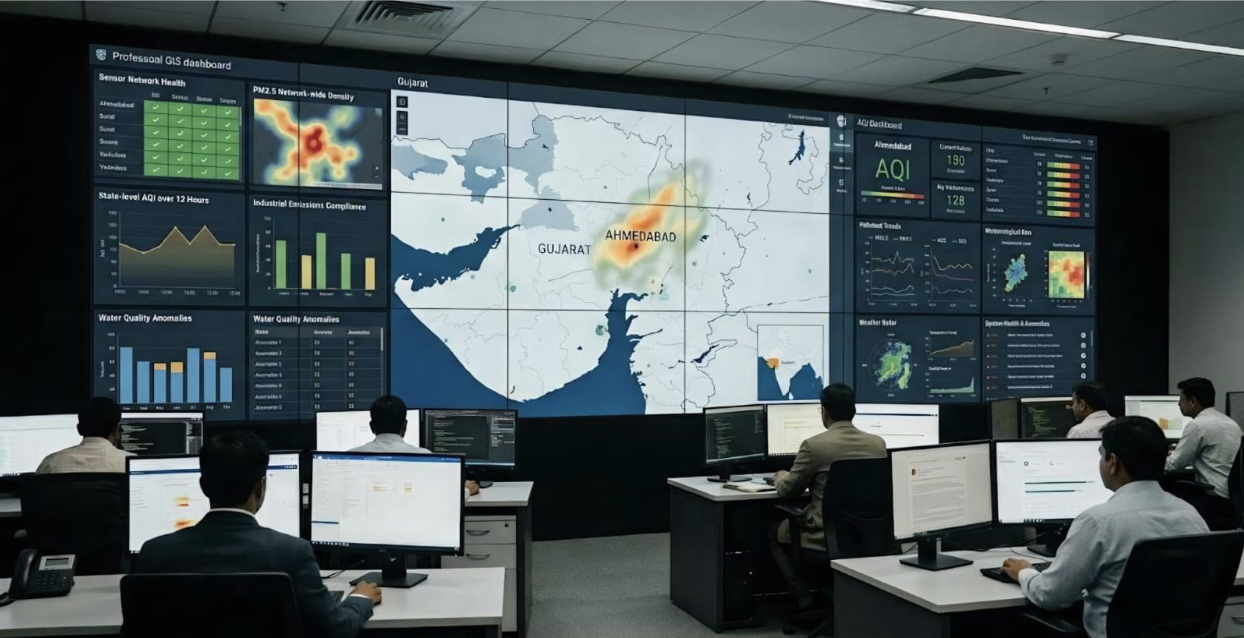
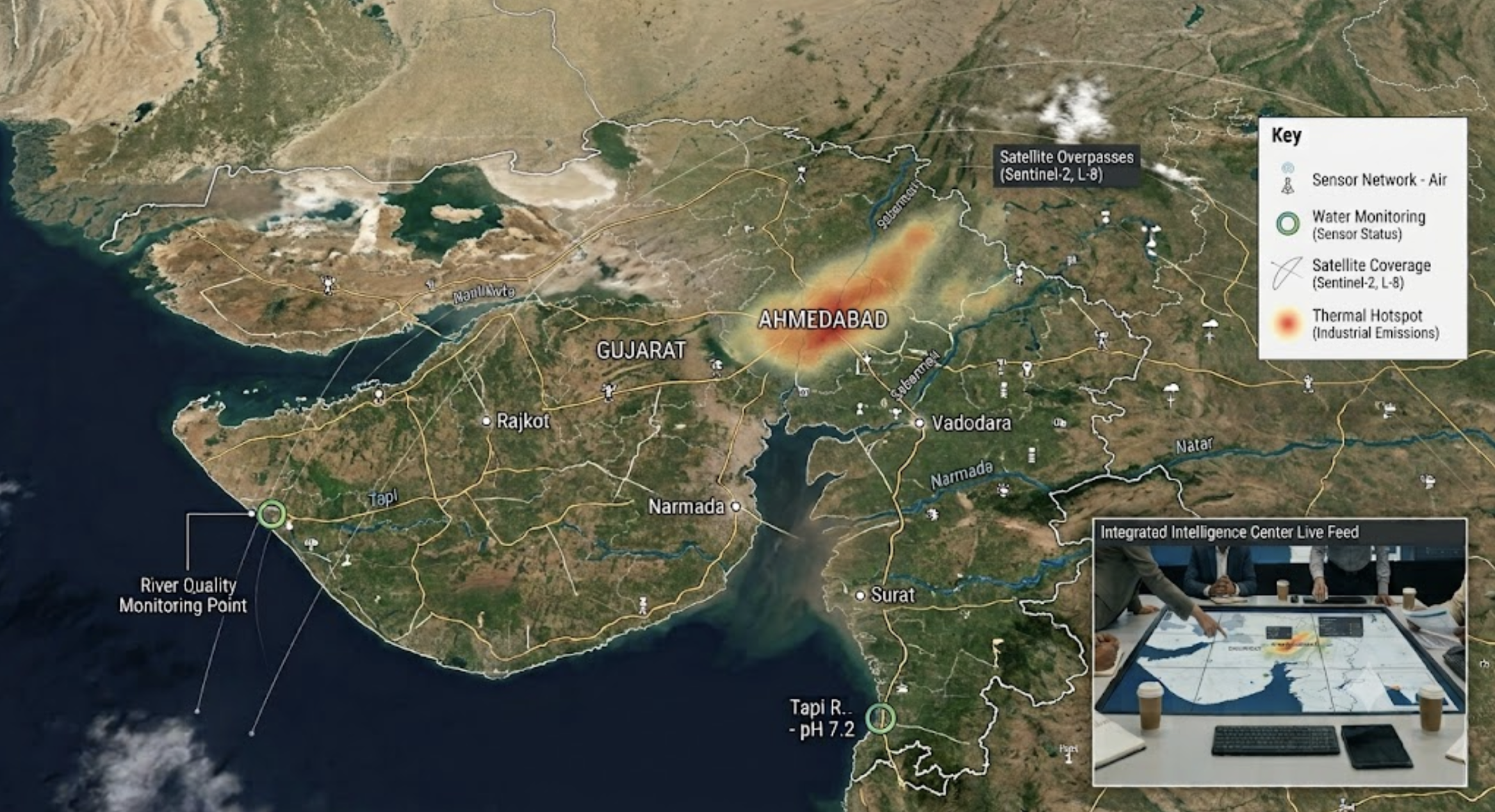
A decision support system that turns Gujarat's continuous emission and effluent data into verified, defensible findings regulators can act on the same day.
Environmental agencies have never lacked data. They have lacked the ability to turn it into trusted, defensible decisions. That is the future we are building.”
GANDHINAGAR, GUJARAT, INDIA, July 28, 2026 /EINPresswire.com/ -- Gujarat has selected Neuralix to build a comprehensive decision support system for industrial compliance monitoring and tracking, on a mandate from the Gujarat Pollution Control Board, environmental regulator of one of India's most industrialised states. Instruments inside plants across Ankleshwar, Vapi and Gujarat's other belts stream air and water readings to the board around the clock, while physical verification happens once or twice a year. The system sits above that instrumentation, converting those streams into a standing assessment of which units need attention and how each is trending.— Vikram Jayaram, Founder & CEO, Neuralix
Each connected unit reports on itself, using instruments it houses, maintains and calibrates, and no second observation of the same discharge exists anywhere, so the board receives readings it cannot independently test. The limits belong to single-modality measurement rather than any device: a stack analyser observes one quantity at one location, so fugitive releases and secondary vents fall outside its coverage, and accuracy degrades between calibrations because a drifting instrument keeps reporting plausible numbers. The constraint is structural rather than analytical. A model examining one stream inherits whatever that stream misses, so sophisticated methods on the same readings leave the blind spot where it was. Verifying a reading requires observing the same event through a second, physically independent mechanism, which makes multi-modal fusion the only architecture that closes the gap.
Fusing measurements that arrive at different resolutions and schedules is long-established. Weather services have blended ground stations, soundings and satellite passes into one description of the atmosphere for 40 years, and the US Environmental Protection Agency adapted that mathematics to air quality. Neuralix has built this before, reconciling optical gas imaging, satellite observation and ground sensors into single estimates of methane leakage for a US energy operator. Its peer-reviewed work on leak detection and repair addresses where to send finite survey effort to find the most leakage, the problem a regulator with more facilities than inspectors faces.
Fusion separates a change in plant behaviour from a change in the weather. An early morning spike often reflects a temperature inversion, routine on the winter Gujarat plain rather than anything a plant did. Removing that contribution leaves what the plant caused, deciding whether an enforcement action survives challenge or collapses when a consultant points at the wind. The same models run in reverse: from a concentration measured downwind and how the air reached it, inverse dispersion modelling estimates the emission rate and the responsible unit, turning an ambient reading into an attributable finding.
Water differs from air physically. Emissions disperse into a shared atmosphere where independent instruments observe them, while effluent travels through pipes the discharger controls. Satellites help far less, reading cloudiness and warmth but little chemistry, across channels narrower than a pixel.
The standard test for organic pollution measures how much oxygen microbes consume over 5 days, so a result read on Friday describes water that left the plant the previous Sunday. A probe in the flowing effluent estimates that load continuously, since organic matter absorbs light in a characteristic way. The probe is commercially available; its calibration decides whether the reading is worth anything, because what it sees maps differently onto what the laboratory certifies for each effluent.
Neuralix builds that calibration from the board's own records. Every past inspection where an officer drew a sample while the instruments were reporting is a matched pair of certified value and sensor reading, and those pairs train the model and test it on a period it has never seen, so accuracy is stated in figures the board trusts. Flow and load must also balance across an estate: what units discharge should equal what arrives at the treatment plant, and its outflow what reaches the river. A pipe diverting flow breaks the totals while every reading looks normal, turning suspicion into a documented discrepancy with a location.
Readings arrive without interruption, so every new one updates the standing position of the unit that sent it. A unit drifting toward a breach appears as a trajectory while there is time to prevent it, and the ranked order of units needing attention regenerates as conditions change, moving inspection toward the strongest evidence. Each finding reaching an officer carries the reasoning behind it, the measurements corroborating it, and a confidence backed by a mathematical guarantee: conformal prediction produces intervals with proven coverage, so certainty holds as a probability whichever algorithm generated it. Authority remains with the board, the system supplying evidence and priority.
Under directions from the Central Pollution Control Board and a Supreme Court ruling in 2017, plants across 17 categories of highly polluting industry report emission and effluent readings around the clock. Every state board runs a network of the same design and faces the same problem, so the architecture built for Gujarat transfers to each of them, extending beyond a single deployment into how continuous monitoring becomes governance at national scale.
Air pollution costs Indian business nearly ₹7 lakh crore a year, around 3 percent of GDP, roughly ₹1,900 crore a day, and the environmental cost alongside it is harder to price and slower to undo. Losses at that scale have resisted more procedure and more inspection. Closing them depends on systems grounded in established science and tested against evidence, turning measurements a country already holds into decisions its regulators can act on and defend. That work is under way in Gujarat.
Siddharth Elango
Neuralix AI
email us here
Visit us on social media:
LinkedIn
Legal Disclaimer:
EIN Presswire provides this news content "as is" without warranty of any kind. We do not accept any responsibility or liability for the accuracy, content, images, videos, licenses, completeness, legality, or reliability of the information contained in this article. If you have any complaints or copyright issues related to this article, kindly contact the author above.
