

Metro Rail Infrastructure Market Forecast to Register 7.7% CAGR, Reaching US$ 78.3 Billion by 2033
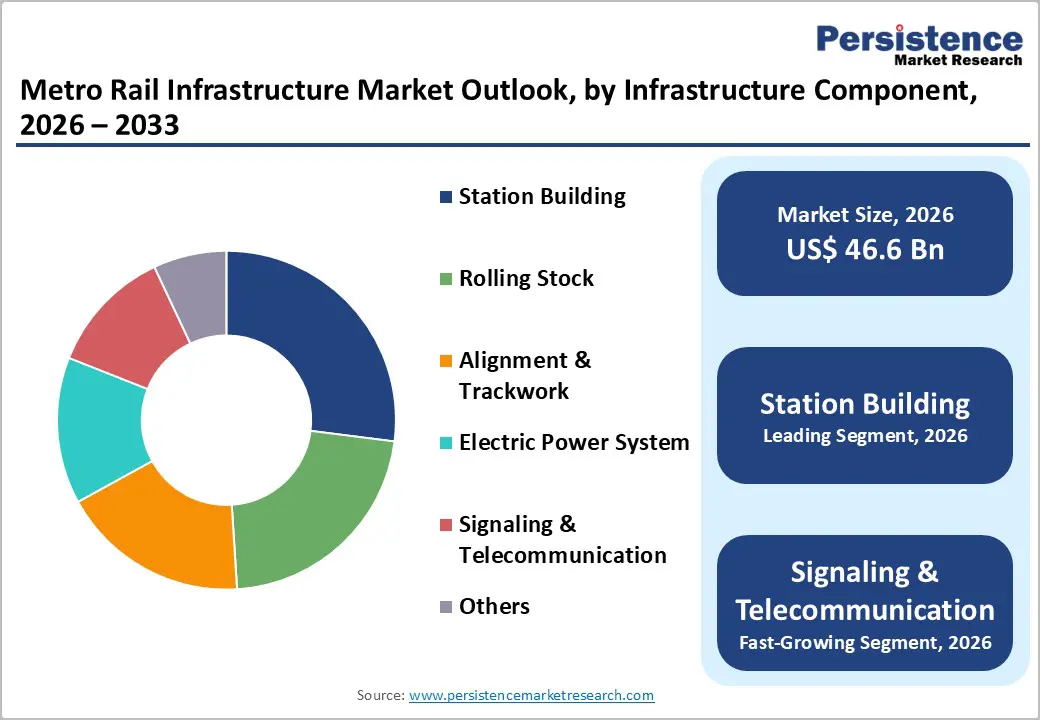
Metro Rail Infrastructure Market 2026 - 2033
Global metro rail infrastructure set for strong growth, driven by urbanization, smart transit tech, and sustainable transport investments.
BRENTFORD, LONDON, UNITED KINGDOM, February 25, 2026 /EINPresswire.com/ -- The global Metro Rail Infrastructure Market is poised for significant expansion, with the total market size estimated at US$ 46.6 billion in 2026 and projected to reach US$ 78.3 billion by 2033, registering a steady Compound Annual Growth Rate (CAGR) of 7.7% during the forecast period from 2026 to 2033. This sustained growth reflects continued global urbanization trends, rising demand for sustainable transportation solutions, and increased investment by both governments and private stakeholders in expanding metro rail networks across emerging and developed economies.
City administrations are under growing pressure to modernize existing transit systems and introduce new metro lines to reduce traffic congestion, minimize environmental impact, and improve overall urban mobility. Supportive government initiatives, public private partnerships, and funding allocations in key regions are also amplifying growth prospects. Furthermore, innovations in rail technology and digital infrastructure are positioning metro systems as backbone transport solutions for modern cities.
Get Your FREE Sample Report: https://www.persistencemarketresearch.com/samples/35120
Key Highlights from the Report
➤ The global metro rail infrastructure market is anticipated to grow from US$ 46.6 billion in 2026 to US$ 78.3 billion by 2033, at a CAGR of 7.7% between 2026 and 2033.
➤ Rapid urban population growth in Asia Pacific is driving accelerated metro rail investments.
➤ Rising environmental concerns and regulatory incentives bolster adoption of electrified mass transit.
➤ Upgrading aging metro networks in Europe and North America presents significant retrofit opportunities.
➤ Advancements in automation, signaling, and safety technologies are enhancing operational efficiencies.
➤ Increased public private collaboration is expanding capital investment and risk sharing models.
Market Segmentation
By Structure Type
• Elevated
• Underground
• At-grade Level
By Infrastructure Component
• Station Building
• Rolling Stock
• Alignment & Trackwork
• Electric Power System
• Signaling & Telecommunication
• Others
By Region
• North America
• Europe
• East Asia
• South Asia and Oceania
• Latin America
• Middle East and Africa
Customize This Report for Your Exact Requirements: https://www.persistencemarketresearch.com/request-customization/35120
Regional Insights
The Asia Pacific region is the leading market for metro rail infrastructure, fueled by rapid urbanization, heavy investment in mass transit, and supportive policy frameworks in countries like China, India, and Southeast Asian nations. China’s extensive metro expansions in cities such as Shanghai and Shenzhen contribute significantly to regional market value, while India’s metro rollout plans across tier 2 and tier 3 cities are accelerating demand.
Europe maintains a strong market presence owing to ongoing modernization of legacy networks in cities such as London, Paris, and Berlin. North America is also expanding metro infrastructure, particularly in metropolitan areas seeking to ease roadway congestion and improve connectiveness.
The fastest growing region is anticipated to be Middle East & Africa, where major infrastructure projects in GCC countries, including metro lines in Saudi Arabia and the United Arab Emirates, are advancing rapidly. Regional governments are emphasizing transit solutions ahead of global events and as part of economic diversification initiatives.
Unique Features and Innovations in the Market
Modern metro rail infrastructure distinguishes itself through integration of smart technologies and digital solutions. Real time data analytics, IoT sensors, and predictive maintenance platforms are enhancing reliability and reducing downtime. Urban transit systems are increasingly deploying AI assisted traffic management and passenger information systems, improving safety and customer experience.
The advent of 5G connectivity within metro corridors supports robust communication between trains, control centers, and passengers. These technologies enable seamless automated operations, advanced surveillance systems, and heightened responsiveness to dynamic urban mobility needs. Sustainability is a central differentiator in new metro projects. Energy efficient construction practices, regenerative braking systems, and green station designs contribute toward carbon neutral objectives and align with global environmental targets.
Market Highlights
Urban planners and transportation authorities are adopting metro rail infrastructure solutions not only to meet present mobility needs but to future proof transportation ecosystems. Regulatory support in the form of infrastructure bonds, low interest loans, and tax incentives is enabling large scale deployment. Operators benefit from reduced lifecycle costs, enhanced safety standards, and improved service reliability.
Sustainability imperatives have led to prioritizing electrified transit systems, which significantly reduce greenhouse gas emissions compared to private vehicles. As cities confront air quality challenges and climate goals, metro networks play a pivotal role in promoting eco friendly urban mobility.
Key Players and Competitive Landscape
The competitive landscape of the metro rail infrastructure market is shaped by major global and regional players investing in technology, partnerships, and geographic expansion. Leading companies are innovating to capture growth opportunities across high potential markets.
✦ Siemens Mobility – A frontrunner in signaling and electrification solutions, Siemens Mobility continually expands its smart rail portfolio to integrate digital operations platforms and sustainable transit technologies.
✦ Alstom – Known for comprehensive metro solutions, Alstom leverages modular train designs and advanced control systems to cater to diverse urban environments and retrofit legacy networks.
✦ Bombardier Transportation – A major provider of rolling stock and rail control systems, Bombardier focuses on energy efficient trains and lightweight designs to enhance performance and reduce operating costs.
✦ CRRC Corporation – As one of the world’s largest rolling stock manufacturers, CRRC drives metro infrastructure growth through strategic partnerships across Asia and international markets, emphasizing high capacity train units.
✦ Thales Group – Specializing in digital signaling and safety systems, Thales strengthens metro operations with secure communications and intelligent transport management solutions.
✦ Hitachi Rail – Hitachi Rail’s global presence and focus on integrated transit systems enable seamless delivery of metro rail projects, from design to operations.
Buy Full Report Today: https://www.persistencemarketresearch.com/checkout/35120
Future Opportunities and Growth Prospects
The metro rail infrastructure market offers robust future opportunities as cities prioritize multi modal connectivity and smart urban planning. Expansion into developing regions, commitment to net zero goals, and integration of digital tools will unlock new revenue streams and project pipelines. Emerging technologies such as autonomous transit, blockchain enabled ticketing, and advanced energy harvesting solutions will reshape how metro systems operate and interact with urban communities. Strengthening regulatory frameworks and funding mechanisms will further support sustainable transit ecosystems globally.
Persistence Market Research
Persistence Market Research Pvt Ltd
+1 646-878-6329
email us here
Visit us on social media:
LinkedIn
Instagram
Facebook
YouTube
X
Legal Disclaimer:
EIN Presswire provides this news content "as is" without warranty of any kind. We do not accept any responsibility or liability for the accuracy, content, images, videos, licenses, completeness, legality, or reliability of the information contained in this article. If you have any complaints or copyright issues related to this article, kindly contact the author above.
